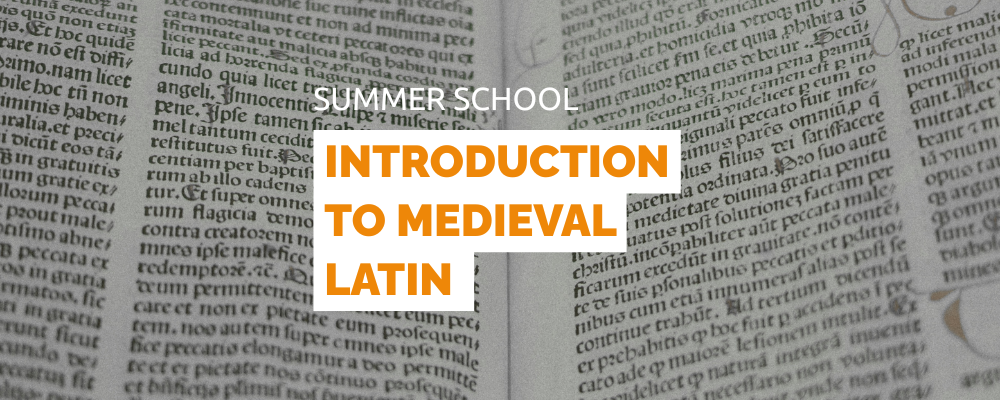
What if, in a single week, you could discover medieval Latin in the very lands where it was written? The Carré international is launching the first edition of its international summer school in living medieval Latin, where the language is spoken, heard, and read in common. An intensive programme from 29 june to 3 july 2026 open to complete beginners and false beginners alike, whether students or not.
Reading the sources in their own language
Our aim is concrete: to enable you to engage with simple, authentic medieval texts – chronicles, battle narratives, saints’ lives – which illuminate the political, religious, and military history of France, and of Normandy in particular. A vast heritage, a substantial portion of which has never been translated and remains accessible only to those who read the original language.
A time-tested method
This summer school revives the practice of medieval clerics and Renaissance humanists alike: teaching Latin in Latin.
Far from being a mere affectation, this approach – supported by contemporary language pedagogy under the name of the inductive and contextual method – enables you to internalise the structures of the language more quickly and more lastingly. You read, you understand, you converse in Latin from the very first sessions.
An exceptional setting for learning
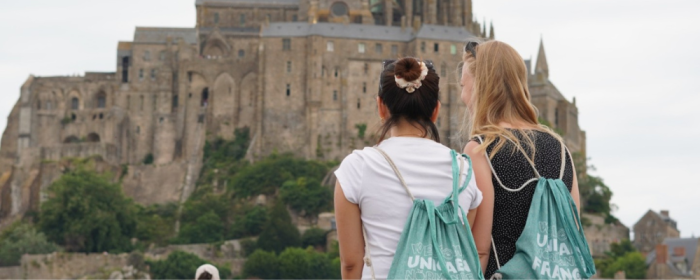
You will explore medieval Latinity through emblematic sources: the Bayeux Tapestry, the chronicles of Mont Saint-Michel, and selected passages from the Gesta Guillelmi. An introduction to palaeography will also acquaint you with the reading of manuscripts dating from the 9th to the 12th century.
More than that, you will step beyond the classroom for visits and conversations conducted in Latin – Caen Castle, medieval Bayeux, the abbeys of Normandy – where every site becomes a space for putting newly acquired knowledge into practice.
One week, one international community
Part of the Carré international’s summer programmes, the school welcomes participants from several countries. Latin becomes once more what it was for centuries: a language of scholarly and cultural exchange shared by an entire community of readers.
read